
We are proud to announce that we are now the official UK Repair and Maintenance Centre for Autel!
Click to find out more
Click to find out more

In March 2026, the Housing Ombudsman published its latest 'learning from severe maladministration' report, focused entirely on hazards. Its timing was deliberate. With Phase 2 of Awaab's Law approaching later this year, the Ombudsman used the report to signal that many landlords are operating under significant pressure and that identifying early warning signs before hazards escalate will be critical to long-term compliance.
We discuss what Phase 2 involves, what the report tells us about the improvements needed and where drone surveys can play a practical role in preparation.
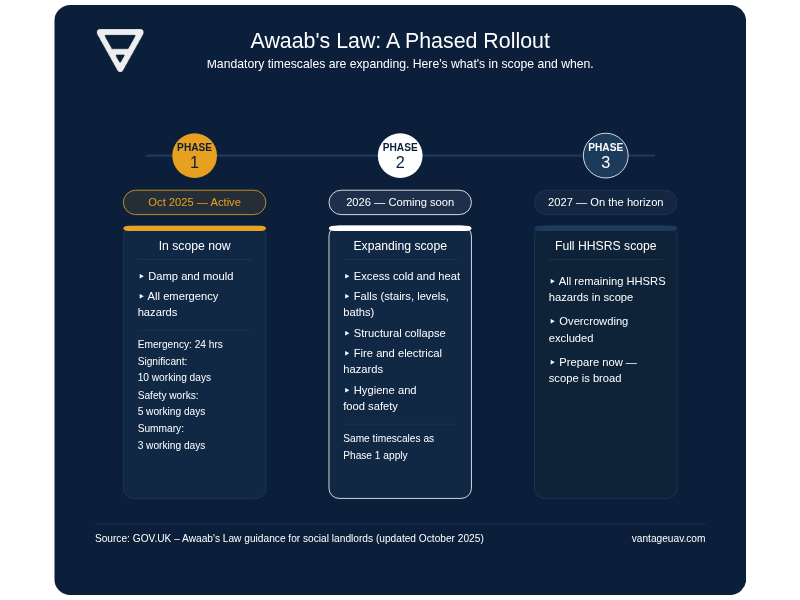
Awaab's Law, introduced through the Social Housing (Regulation) Act 2023, has been in force since October 2025. Phase 1 imposed legally binding timescales on all social landlords for investigating and resolving damp, mould and emergency hazards - with investigation required within 10 working days, with safety works complete within five days of investigation and emergency hazards addressed within 24 hours.
Phase 2, due later in 2026, extends the same framework to a wider set of hazards where they present a significant risk of harm:
Phase 3, due in 2027, will then cover all remaining HHSRS hazards except overcrowding. The deadlines and obligations do not change - the range of hazards that trigger them does.
The March report draws on casework to illustrate how hazards escalate when early warning signs are missed. Cases in the report highlight the serious impact hazards can have when they go unresolved, from loss of heating and hot water to overheating and excess cold. They illustrate why proactive identification matters.
Housing Ombudsman, Richard Blakeway, was direct in the report. He pointed to common sector-wide challenges such as stretched resources, complex processes and the difficulty of coordinating across teams, as factors that can slow response when multiple hazards are present.
He also warned in Phase 2, where multiple hazards are present in a single home, the complexity of assessment increases significantly.
The report points to three consistent areas for focus.
Data and hazard awareness: Many maladministration findings stem not from a lack of policy but from delay to act on information. Proactive stock condition data becomes more valuable as more hazard categories come into scope.
Multiple hazards: Where a property has overlapping risks - structural issues alongside poor heating, for example - landlords need clear processes for identifying and escalating them, regardless of which team first becomes aware.
Void periods: The Ombudsman specifically highlights voids as an opportunity to identify hazards before a new tenancy begins, before any statutory timescales apply.
While drone surveys won’t cover every Phase 2 hazard category - internal electrical faults, fall risks within a home and internal structural issues require different approaches. But where aerial surveys add genuine value is in external condition data, specifically across several of the hazard types entering scope.
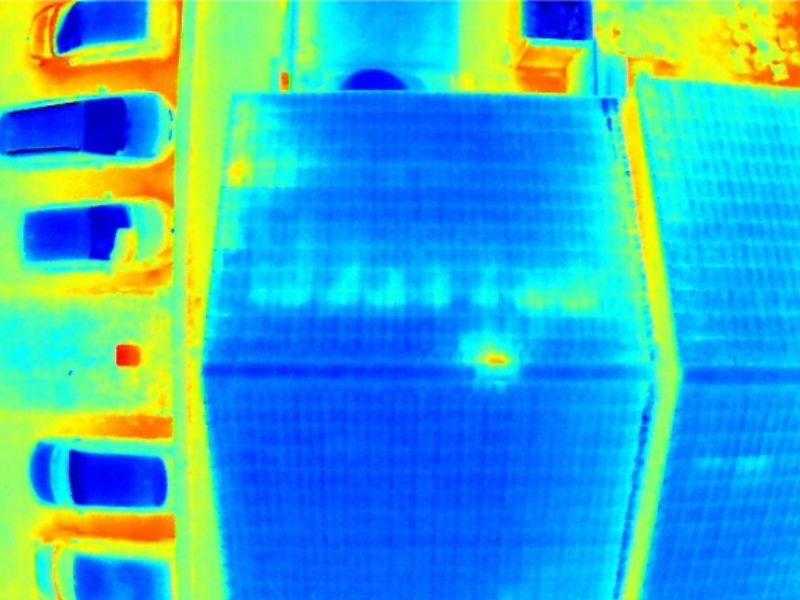
Excess cold and excess heat: Thermal imaging surveys identify heat loss across a building's envelope, flagging roofing defects, failed insulation and external wall deterioration. Across large volumes of stock, this helps landlords triage which properties need priority attention.
Structural indicators: Drones provide effective first-pass inspection of external structural warning signs such as cracking facades, deteriorating brickwork, movement around chimney stacks, degraded parapets. This does not replace a structural engineer's assessment, but it informs where that investment is directed.
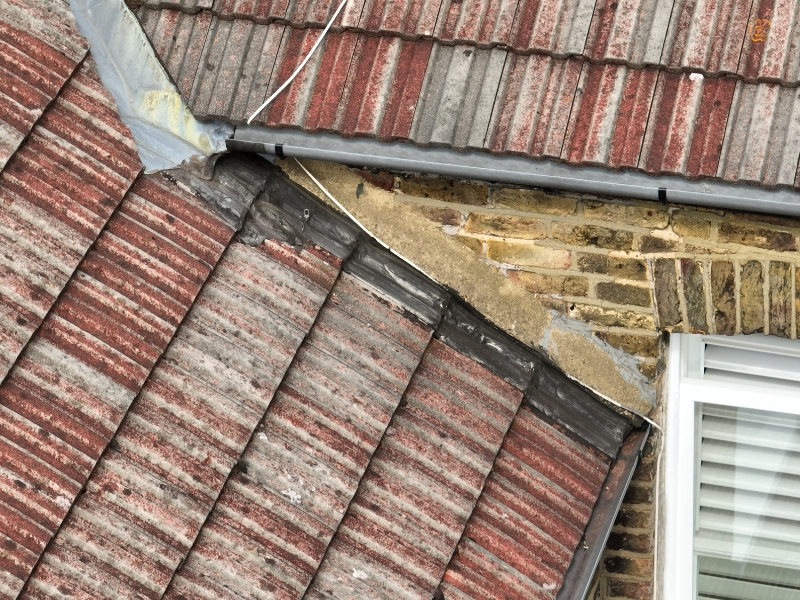
Drainage and moisture pathways: Blocked gutters and failed drainage infrastructure are common contributors to moisture-related damage and structural deterioration. Drone inspections can survey guttering and drainage at scale - across rooftops and in locations that are unsafe or costly to access using traditional inspection methods.
The Ombudsman's report is a useful prompt, but its message goes beyond any single deadline. The pattern it identifies is the importance of proactive data, early identification and joined-up processes, all relevant across multiple hazard categories, not just those already in scope. Phase 2 raises the stakes by expanding the range of hazards with mandatory timescales attached.
For housing associations, the strongest preparation is treating Phase 2 not as an isolated compliance event but as an opportunity to strengthen the systems that determine whether any hazard is identified, recorded and acted on in time. Aerial surveys are one practical tool in that process, particularly for external condition, thermal performance and structural indicators across large portfolios.


.webp)